
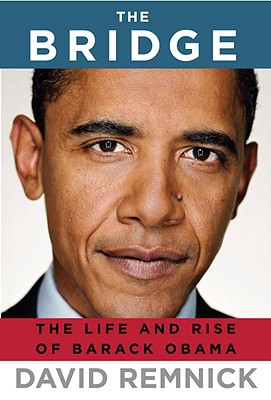
A few days ago I was listening to NPR and I heard Susan Jane Gilman review The Bridge, a biography of Barack Obama by David Remnick. I was listening along peacefully enough until she announced:
In a particularly sobering section, Remnick notes that 12 American presidents owned slaves, eight while in office…
Well, yes, I knew that. In fact, while Gilman got that news from Remnick, almost certainly Remnick had gotten it, directly or otherwise, from me.
The Anti-Jefferson
Back in 2001 I read an article by Andrew Levy in The American Scholar. “The Anti-Jefferson” was about Robert Carter III, a neighbor of George Washington and Thomas Jefferson who decided it was wrong to own people. Over time he freed about five hundred slaves, more than any other individual in U.S. history. (Levy later wrote a wonderful book about Carter, The First Emancipator.)
The article fascinated me and made we wonder how many presidents owned slaves. It wasn’t easy to find out. I tried paper and web sources and got conflicting and partial information. Part of the problem was confusion between how many owned slaves during their lifetimes versus how many owned them during the presidency.
Since I’m a librarian I knew what to do next. I spent a lot of lunch hours going through the history books and concluded, as you already guessed, that the numbers were twelve and eight.
Then I created a website: Which U.S. Presidents Owned Slaves? It includes 4 pages of bibliography to back up my views, and every relevant quotation I could find from our first eighteen presidents (number 18, Ulysses S. Grant, was the last who owned slaves in his lifetime).
Crossing The Bridge
So, I was excited to see if Remnick had cited me. It would be fun to appear in the endnotes of what sounded like might be a bestseller.
My website has been cited before. One author was kind enough to send me a copy of his book. It has also been noted in a doctorate dissertation, a newspaper article, and at least one scholarly paper.
And there is another sign that I have become, so to speak, the authority in the field. Search Google for which presidents owned slaves. My website comes up first. Of the other nine sites that come up on the first Google page, five link to mine. (And I am just malicious enough to note that at least one of the four sites that doesn’t link to mine got the number wrong.)
Of course, I knew Remnick’s book was a popular, rather than an academic volume, so it might not have endnotes at all. As it turns out, The Bridge does. Almost 600 endnotes, in fact, and a bibliography. But my name appears in neither place. The exact quotation, on page 562, says
Twelve Presidents owned slaves, eight of them while in office.
But there is no endnote explaining where Remnick got his information.
At first I was quite annoyed. Then it occurred to me: Maybe my declaration has become common knowledge.
Missing a sale
You don’t have to cite things everybody knows. Do you want to mention that Abraham Lincoln wrote a letter about slavery to his friend Joshua Speed in 1855? You had better cite your source. But if you want to say that Abraham Lincoln was the sixteenth president, hey, no endnote needed. Because everybody knows that.
And I suppose that would be Remnick’s take on it. The conclusion I dug out over so many lunch hours ten years ago is now something everybody knows.
You can’t copyright a fact, of course, only the expression of it. And it is kind of cool to have become a bearer of common knowledge, if that is what happened here. Still, if my name appeared in the book, Remnick’s sales would have increased by one.


